
The Volney Project
High-grade gold and lithium with historic tin in South Dakota's Black Hills — two independent mineral systems within a single past-producing property, mineralized from surface.
Two Mineral Systems, One Project
Shear-hosted gold mineralization occurs alongside lithium‑cesium‑tantalum (LCT) pegmatites — multiple, independent exploration targets within a single project footprint.
Key Highlights
Two Mineral Systems, One Project
Shear-hosted gold mineralization occurs alongside lithium-tantalum-tin (LCT) pegmatites, providing multiple, independent exploration targets within a single project footprint.
District-Scale Lithium Potential
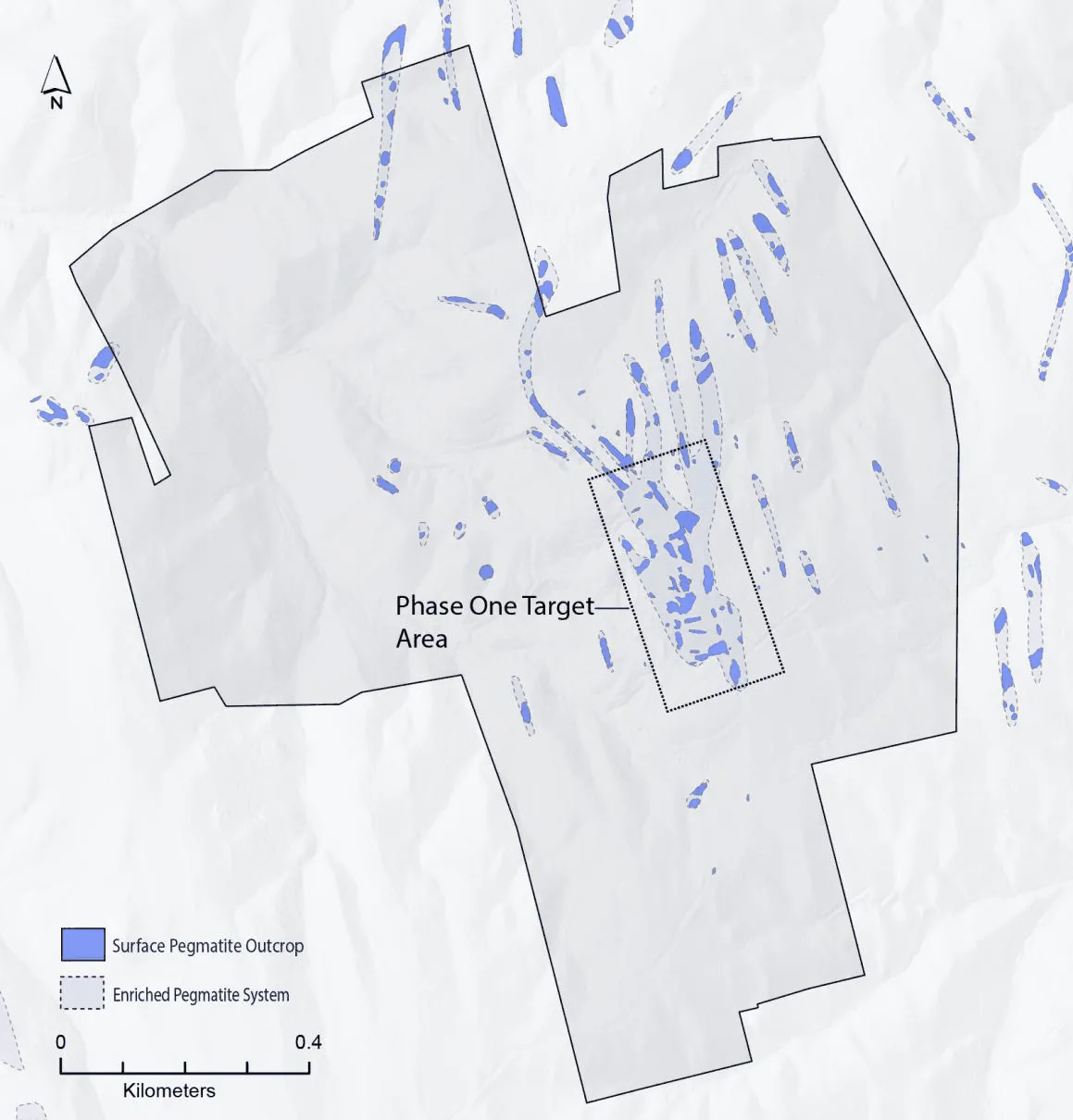
Multiple LCT pegmatites converge to form the Giant Volney Pegmatite, extending approximately 635 metres at surface. Surface sampling returned average grades of 4.4% Li₂O, with values up to 5.4% Li₂O.
Active, Funded Exploration
Lion Rock has completed its Phase 1 drill program at Volney — an active, funded exploration effort systematically advancing both gold and lithium targets, with Phase 2 planning underway.
Compelling High-Grade Gold History
Historic workings at the Rusty Mine reported gold intersections of 5 to 15 g/t Au over widths of 15 to 45 metres. Channel sampling at the Rough and Ready Mine returned 18.2 g/t Au over 18.3 metres.
Underexplored at Depth
Historic drilling at the Rusty Mine was limited to approximately 50 metres depth, yet intersected wide mineralized zones in all eight drill holes — the system remains largely untested at depth.
Past-Producing Ground
Historic production of cassiterite, tantalite, and spodumene concentrates — all from a single zone — supports the fertility of the LCT pegmatite system across the broader property.
Historical results referenced above have not been verified by a Qualified Person and should not be relied upon. They are presented as an indication of the exploration history of the property.
Gold, Lithium, and Tin in a Historic Mining District
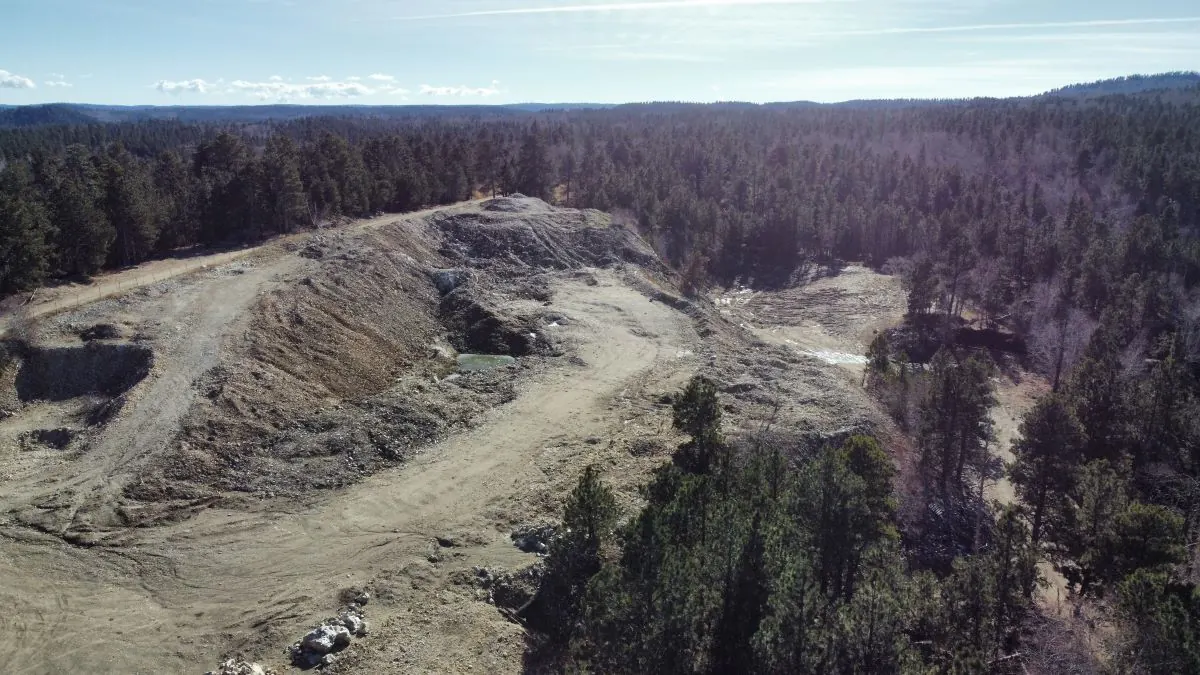
The Volney Project is located in the Black Hills of South Dakota, a region with a long history of gold and tin production and limited modern exploration. The property hosts multiple historic mines and workings, including the Rusty Mine and Hydliff Adit for gold, and the Rough and Ready Mine for tin and gold.
Gold mineralization at Volney is interpreted to be shear-hosted, with wide zones of mineralization identified in historic surface and underground workings. Lithium mineralization is hosted within LCT pegmatites, including the Giant Volney Pegmatite — a key focus of the project's hard-rock lithium exploration.
Historic exploration across the property was shallow and discontinuous, leaving the system largely untested at depth and along strike.
Proven Neighbourhood, Year-Round Access
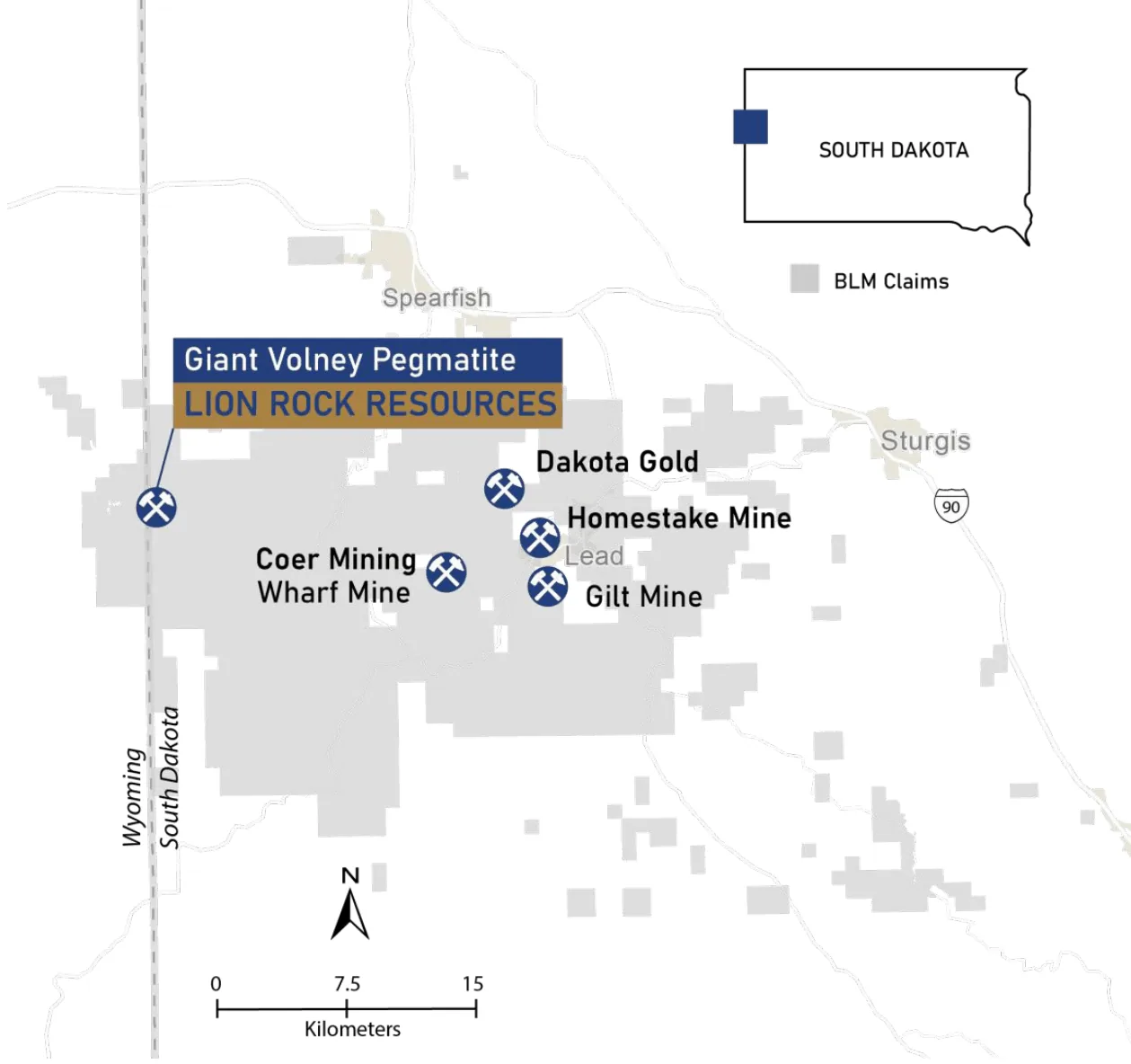
Volney benefits from excellent year-round road access and is located within the Black Hills mining district — one of North America's most historically productive gold regions. The 142 hectares are private claims with surface and mineral rights held outright.
Homestake Mine
Historic producer — 40M+ oz Au from the district's flagship mine
Coeur Mining — Wharf Mine
Active gold operations in the district today
Dakota Gold
Ongoing exploration across the Black Hills
Agnico Eagle
Active in the Black Hills district today
Modern Drilling in an Underexplored System
Historic drilling at Volney was limited to shallow depths — generally less than 50 metres — yet consistently intersected mineralization. This provides a strong technical rationale for modern drilling to evaluate depth extensions, structural continuity, and additional pegmatite targets across the property.
Tin-rich zones near the Rough and Ready Mine, where high-grade cassiterite production occurred in the early 20th century, further support the fertility of the LCT pegmatite system and provide additional exploration vectors.
Lion Rock is advancing Volney with a disciplined, technically driven approach designed to systematically evaluate both gold and lithium mineralization.
Drill-Confirmed, From Surface
Fifteen holes and ~3,600 metres completed on schedule and budget — mineralization intersected from surface, grades at or above commercial thresholds, and gold in all nine holes that targeted gold-bearing structures.
- 2.3% Li₂O over 5.7 mVOL24-007
- 0.8% Li₂O over 25.4 m from 12.2 m depthVOL24-004
- 3,715 ppm Ta₂O₅ over 1.0 mVOL25-013
- 0.3% Sn over 3.0 mVOL24-006
- 10.9 m @ 2.0 g/t Au within 24.8 m @ 0.8 g/tVOL25-006
First of multiple targets — surface sampling confirms additional mineralized pegmatites along strike and across the property.
Follow the Volney Project
Get updates on exploration progress, drilling results, and company news from Lion Rock Resources.
Subscribe for Updates
News releases, drill results, and project milestones delivered straight to your inbox. Be the first to know.
By subscribing you consent to receive news, updates, and other communications by commercial electronic message from Lion Rock Resources Inc. You may withdraw consent at any time via the unsubscribe link in every email.
Speak with Investor Relations
Questions on the company, share structure, or the Volney Project? Reach our team directly.
Contact IRinfo@lionrockresources.com · +1 604 678 5308